For years, industry analysts and other technology wonks have peppered CTOs with reports of how they would one day report to the chief marketing officer or others in the C-suite. That day may be nearer than you think based on the results of a new global survey of business leaders.
The Business Performance Innovation (BPI) Network reported that senior business managers are so utterly disappointed by the lack of innovation coming from their IT groups that many now want to see the groups graded by the same sort of business metrics they must follow. That idea is rapidly gaining traction with CIOs as data centers move to hybrid cloud models, BPI found in a series of post-survey interviews.
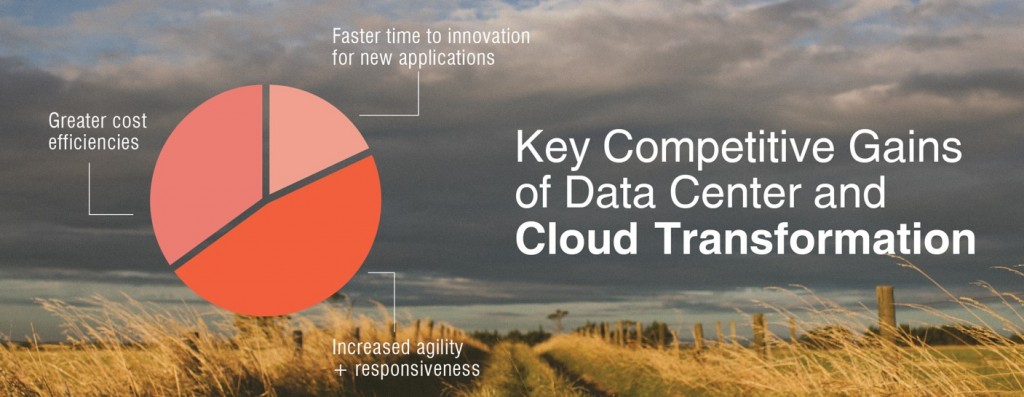
The survey, perhaps the first to quantify shifts in the way IT operates within the context of hybrid technologies, also turned up evidence that business managers have developed a very sophisticated understanding of emerging technologies and of the competitive advantages they can bring. About two-thirds of the respondents said technology is “far more” important to their organizations than just five years ago. The three top benefits they see of data center and cloud transformation are increased agility and response to business changes (70%), greater cost efficiencies (57%), and faster time to delivery of innovative applications (47%).
The managers lamented that their tech-savvy competitors are already disrupting markets by offering more choice and convenience (45%), lowering costs (34%), providing greater customer value with personal service (29%), and taking market share (25%). It’s understandable that the managers expect the same type of advances from their in-house IT teams, but only 47 percent rate the level of innovation from IT as good or higher, while the majority (52%) see room for improvement.
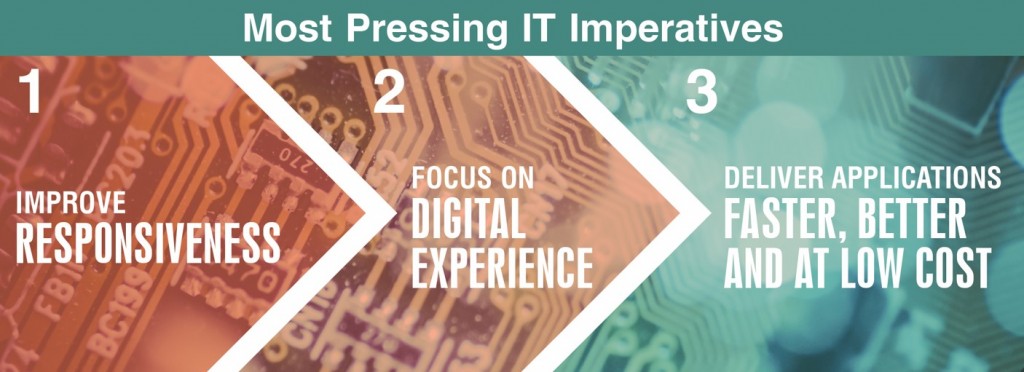
“Business leaders want to migrate as soon as possible to hybrid IT solutions that blend modernized data centers with cloud-enable technologies,” BPI said in the report that framed the survey. “They want new business-changing applications and customer experiences delivered more rapidly. They want deeper business insights from their growing stores of data. And they want the IT group to be held more accountable for providing them.”
The full report is available for free download at ReinventDatacenters.com, the site behind BPI’s broader “Transform to Better Perform” research initiative. The initiative itself is one of several research projects initiated by BPI in recent years to enhance understanding of business, technology and innovation. This project includes insights from executives who are part of BPI’s global network of business and tech leaders, including top executives from Dimension Data and DatacenterDynamics, which sponsored the independent project and provided technical expertise.
The survey, conducted during June and July, reflected responses from 250 business and tech managers in demographically targeted groups. Almost half were CEOs or other C-level executives; the remainder included managers in operations, sales, marketing, technology and other areas. Over half worked at companies with more than $100 million in sales, and about a quarter of the companies had revenue of over $1 billion. Just under half the respondents were from North America, 19 percent from Europe and the remainder from Asia, Latin America, South America, Australia, Africa and other countries.
Metrics for IT Performance
Asked what metrics they’d apply to evaluate the effectiveness of IT organizations, the first response was in line with what most IT leaders might say: reliability, scalability and security of the IT infrastructure (46%). After that, it got more interesting. Nearly two in five respondents (38%) would rate IT on the basis of the “ideas and solutions for furthering business performance.” And more than a third (36%) said the “quality and timeliness” of application delivery should be in the mix. Other replies focused on such business-centric themes as customer satisfaction with tech-driven interfaces (27%), employee productivity and yield (23%), contributions to revenue and customer monetization (15%), and even acquisition and retention of customers (11%).
Asked how well the IT organization is currently executing “its mandate to transform and become a more strategic, responsive and valued business partner,” the respondents again appeared disappointed. Only 14 percent said “very well,” while 10 percent said “poor.” The majority were in the lower half, with 44% saying the IT team was just “making progress.”
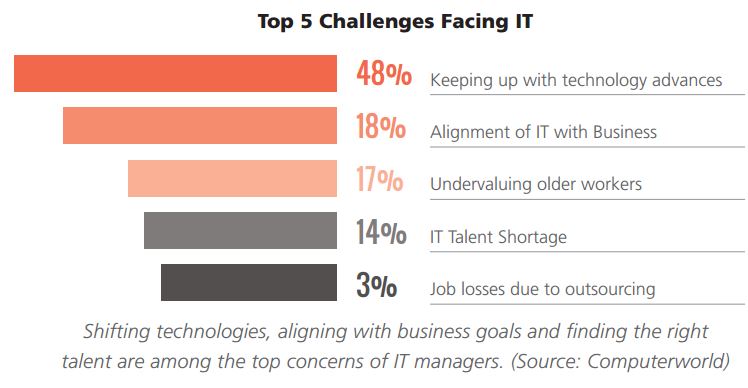 As part of its research, BPI asked a wide variety of CIOs for their reaction and found that most agreed it is time for IT to take greater responsibility for business realities. “Now more than ever, it’s time for the technology team to rise to the occasion and start becoming an integral part of the strategy of any company or institution where they’re involved,” said Paige Francis, CIO at Fairfield University.
“The information systems division is serving either customers directly through websites or serving people who are serving customers,” noted Antoine de Keviler, CIO of Eurostar International. “Therefore, they should monitor business metrics and measure their contribution to the company’s strategy. Measuring technical improvements that have no impact on costs, increased revenue or increased customer satisfaction is all very well, but what purpose does it serve? And there’s no need to reinvent the wheel. The business metrics should be the same as those used in the rest of the company.”
For the most part, the CIOs also supported the findings when it came to innovation, although some shared the blame for the sluggish pace with their business counterparts or attributed it to the complexities of running an enterprise-level operation. “The process of building anything useful is not a quick process once you reach the enterprise level,” said Keith Brooks, CIO at VanessaBrooks. “It is easier for a startup to provide some basic application because they give little thought to security, directory, offline activity, multiple languages or even integration into basic systems like email or business tools—all of which enterprises must keep in mind.”
Peer-to-Peer Research
The Transform to Better Perform initiative didn’t start with this survey and won’t end with it either. In May, the project published an initial report that included qualitative interviews with CIOs and business managers worldwide, in line with BPI’s role as a global peer-to-peer knowledge-sharing organization. That report reflected the thinking of dozens of executives who are part of BPI’s global network.
BPI also produced a recent private CIO roundtable in San Francisco on July 30 that included representatives of Fidelity Investments, Cushman & Wakefield, Goldman Sachs, DatacenterDynamics, Dimension Data, Calix and other top-tier organizations. Afterwards, some of those present acknowledged the innovation gap at enterprise companies. “I think it’s real and it’s big,” said Tim Chou, an IT lecturer at Stanford University. “I would claim right now there is almost no innovation occurring in most corporations.”
Others took a more philosophical view, noting that the IT team can be more innovative when they have a better understanding of the organization’s business needs. “An engineering team that knows what the sales person or the marketing person is trying to accomplish is going to have a much better handle on it than [they’d get from a spec sheet]. And it also gets them more invested in the actual product they’re producing,” said Byron Ellis, CTO of Spongcell. “They’re problem solvers, and they want to solve this problem for a person.”
About the Author
 Tom Murphy, editorial director for the BPI Network, has focused on the nexus of technology and business for more than 30 years during his work at UBM Tech, Bloomberg News, The Associated Press, CMSWire and other organizations. His work has appeared in the New York Times, Los Angeles Times and scores of other publications. He is also author of Web Rules: How the Internet is Changing the Way Consumers Make Choices.